
Bed & breakfast
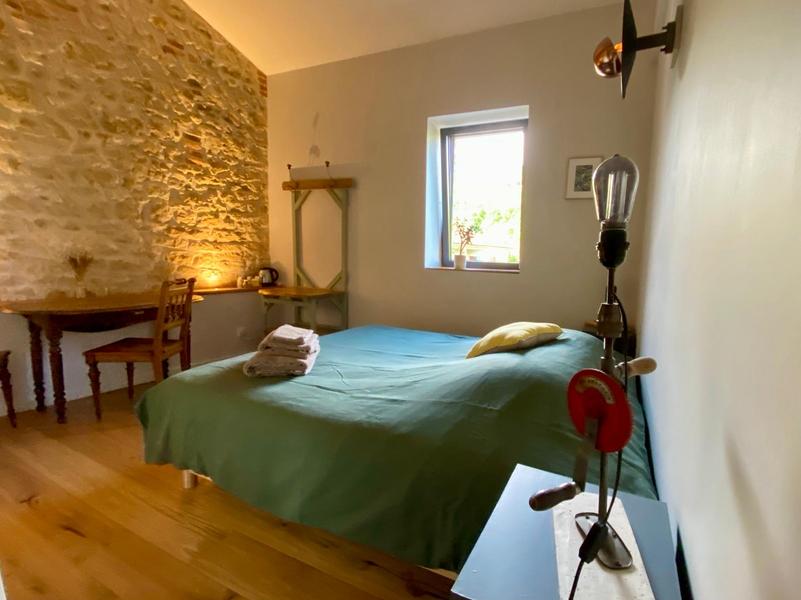
La Grange de Verjon – studio
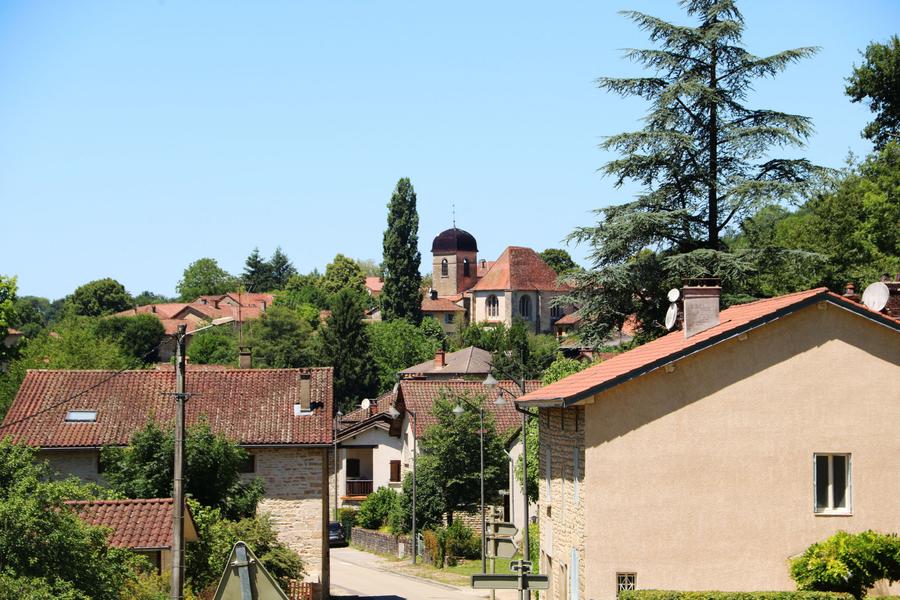
Verjon

Coligny

The Coligny god is a bronze statue (1.74 m) unearthed in multiple fragments at a place called "en Verpois" (north of the commune). It depicts an athletic, naked young man with curly hair, probably the god Mars. The missing eyes were probably glass beads. The raised right arm rests on a staff. Above the hair, a smooth band was used to attach a headdress, probably a helmet (now missing). Unfortunately, the left arm is incomplete. The significance of these naked Mars figures, whose distribution is practically limited to Northern Gaul, is undoubtedly different from that of the armored Mars. Here, the god is practically stripped of his military and warlike appearance; he could be the equivalent of Teutates, his Gallic counterpart. Dating: 2nd half of the first century.
The Gallic calendar: discovered in the same place, it also dates from the same period as the god Mars.
It consists of a large rectangular bronze plate (1.48 m x 0.80 m), broken into 150 fragments. Although incomplete, it is reputed to bear the longest known inscription in the Gallic language, written here in Latin characters: some 600 different words have been preserved! This is a lunisolar calendar: the months are punctuated by the phases of the moon. Five years are represented, each comprising 12 "ordinary" months, alternating between 29 and 30 days in length, to keep as close as possible to the 365-day solar year. However, two "intercalary" months have been added (one every 2.5 years), to avoid too great a discrepancy between calendar time and the reality of the seasons. Each month has a name and is divided into two fortnights separated by the word atenoux (?). Some months are marked ""mat"" (good), others ""anmat"" (bad). The days have no names. They are materialized by a hole in which a wooden peg is placed and advanced daily. A number of notations remain untranslated: they may refer to particular festivals or ceremonies that took place on that day. The perforations correspond to the location of the pegs used to mark the days.
It is assumed that the calendar and statue were originally placed in a temple. Religious use would explain the permanence of this calendar, based on an ancient time-counting system that was abandoned in Roman times with the adoption of the Julian calendar in the middle of the 1st century BC.
Gaspard II, comte de Coligny (1519-1572)
Third son of Gaspard I de Coligny, Marshal of France, and Louise de Montmorency, lady-in-waiting to Queen Éléonore of Habsbourg (François I). A famous warrior, appointed Admiral of France, he became leader of the Protestant party on the death of Henri II. Governor of Normandy, he made it the stronghold of the Reformed. It was he who turned the French Reformation of the second half of the 16th century into an armed party with organized troops. Coligny's entire life was marked by his relationship with the Guise family. As advisor to King Charles IX, over whom he had great influence, he advised him to intervene in the Netherlands, but the Queen Mother, Catherine de Médicis and the Catholic leaders led by the Guise opposed this intervention. They organized an attack on Coligny, who was wounded on August 22, 1572, then assassinated and defenestrated on August 24 during the St. Bartholomew's Day massacre: Huguenot leaders had gathered in Paris to attend the wedding of Henri de Navarre and Marguerite de Valois (sister of the King).
From 01/01/2025 to 13/11/2026 on Wednesday between 8.30 am and 12 pm. On Monday, Tuesday, Thursday and Friday between 8.30 am and 12 pm and between 1.30 pm and 5 pm.
TarifsFree access during Town Hall opening hours - free of charge.
Contact et accès 262 grande rue